
Microwave-only dinners: three meals to make without a hob
By PantryAI ·
- microwave meals
- dinner ideas
- microwave-only
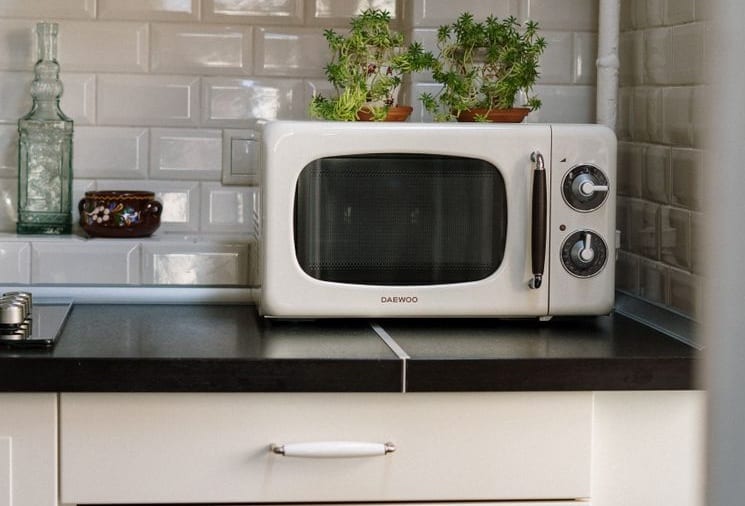
Hero photo: cottonbro studio / Pexels.
The potato uses beans already in chilli sauce; the chilli and curry need chopped onion and spices. Compare the preparation, cooking time and servings below, then open the original recipe for its quantities and method.
Choose tonight's dinner
| Dinner | What it is | Prep | Cooking / standing | Serves / full recipe |
|---|---|---|---|---|
| Tuna & chilli-bean potato | Potato, chilli beans, sweetcorn, tuna and cheese | Under 30 min | 10–30 min (BBC band); follow standing steps | 1 · BBC Food |
| Bean chilli | Tinned kidney beans and tomatoes with cumin, paprika and dark chocolate | 10 min | 5 min, plus standing | 2 · Good Food |
| Chickpea & spinach curry | Chickpeas, spinach, tomatoes and coconut milk with warming spices | 10 min | 10 min | 2 · Good Food |
A jacket potato with tuna and chilli beans
Justine Pattison's microwave jacket potato with tuna and spicy beans on BBC Food is a useful place to start if you don't want to buy several spice jars. Beans in chilli sauce bring the seasoning, with sweetcorn, tuna and a little grated cheddar making up the topping.
Equipment
You'll need: a microwaveable plate, a medium microwaveable bowl and suitable lid or plate to cover it, plus a fork, knife and grater. Check whether your tins need a tin opener.
It's written for one person, and the recipe gives different timings for two microwave wattages. That's more useful than a single instruction to cook on “high”. Match the method to your appliance; the potato's stated size matters too.
Prick the potato before cooking, turn it as directed and check the centre is soft. The topping cooks separately before everything comes together. You don't need to balance a hot potato and a bowl in the microwave at the same time.
The recipe uses part of a tin of chilli beans. If you won't use the rest immediately, transfer it to a covered container, refrigerate it and follow the tin's after-opening instructions. The Food Standards Agency advises against storing food in an opened tin.
Tinned-bean chilli with bread
Jack Monroe's microwave chilli on Good Food combines tinned kidney beans and tomatoes with cumin, paprika and a little dark chocolate. It's the choice for a tomato-based bowl with spices rather than a potato underneath. Serve with bread to scoop up the sauce.
Equipment
You'll need: a microwaveable container, microwave-suitable cling film and kitchen paper used as the recipe directs, a chopping board, knife, spoon and a way to drain and rinse the beans. A sieve is useful for draining the tomatoes while keeping their juice.
The beans are tinned, so there's no soaking or cooking dried beans first. It serves two; choose it for two people or make sure you have fridge space for the extra portion.
Reserve the tomato juice when you drain the tin. The recipe uses it if the chilli needs more liquid. Follow its separate heating, stirring and standing stages rather than running them together into one uninterrupted blast. It also changes from high to medium power, so check you can select both settings.
This isn't a recipe for dried kidney beans. Buy the tinned beans specified, and use the original quantities and method.
Chickpea and spinach curry with coconut and lime
Elaine Lemm's microwave garam masala vegetable curry on Good Food uses tinned chickpeas, chopped tomatoes, spinach and coconut milk. Lime finishes the sauce, giving you a different dinner from the tomato-and-bean chilli rather than another version of the same bowl.
Equipment
You'll need: a microwaveable dish or bowl, a chopping board, knife, spoon, measuring spoons and a jug for the coconut milk. You'll also need to drain the chickpeas.
This suits a night when you already have a few spices. The ingredient list includes garam masala, cumin, coriander and turmeric, as well as ginger and garlic pastes. If you're buying everything from scratch, the chilli-bean potato asks for less of a spice cupboard.
The onion and spices have their own cooking stages before the chickpeas, tomatoes and coconut milk go in.
The curry serves two. The original suggests rice or naan alongside it. Bread keeps the microwave free for the curry. Check naan instructions if you want to serve it warm. If you'd prefer rice, choose a pouch with microwave directions and heat it separately according to its pack, not in the curry bowl on a guessed combined time.
Don't have the ingredients for those dinners?
Start with what you do have, rather than trying to make the curry without chickpeas, coconut milk or spices. You don't need to use up every stray ingredient in the same bowl.
- Pick the main part of dinner first. A potato, tinned beans, a microwave rice pouch or bread gives you a useful starting point. Then look for something to go with it: tinned tuna, beans in sauce, cheese or vegetables with microwave cooking directions. Bread and salad can go alongside without using the microwave.
- For example, a potato and a tin of baked beans point towards a topped potato; tinned chickpeas and tomatoes point towards a bean-based bowl. Those are directions to explore, not permission to swap ingredients into the recipes above and keep the same timings.
- Search for the ingredients and the microwave together. Try a phrase such as “microwave jacket potato baked beans” or “microwave chickpeas tinned tomatoes”. Include the form of anything that changes the cooking: tinned rather than dried beans, or frozen rather than fresh vegetables. That makes it easier to spot a recipe written for the food you actually have.
- Read the whole method before you start. Look for a microwave-only recipe with quantities, power settings, stirring and standing instructions. Check the equipment too: a recipe that says to fry the onion first or finish under a grill doesn't fit a microwave-only kitchen. Set aside ones that need ingredients or equipment you can't use, rather than guessing how to work around them.
If you've got a pouch or ready meal with microwave instructions, that can be the hot part of dinner, with a separate ready-to-eat side. You don't have to turn everything into a new recipe to make a meal.
What can go in the microwave?
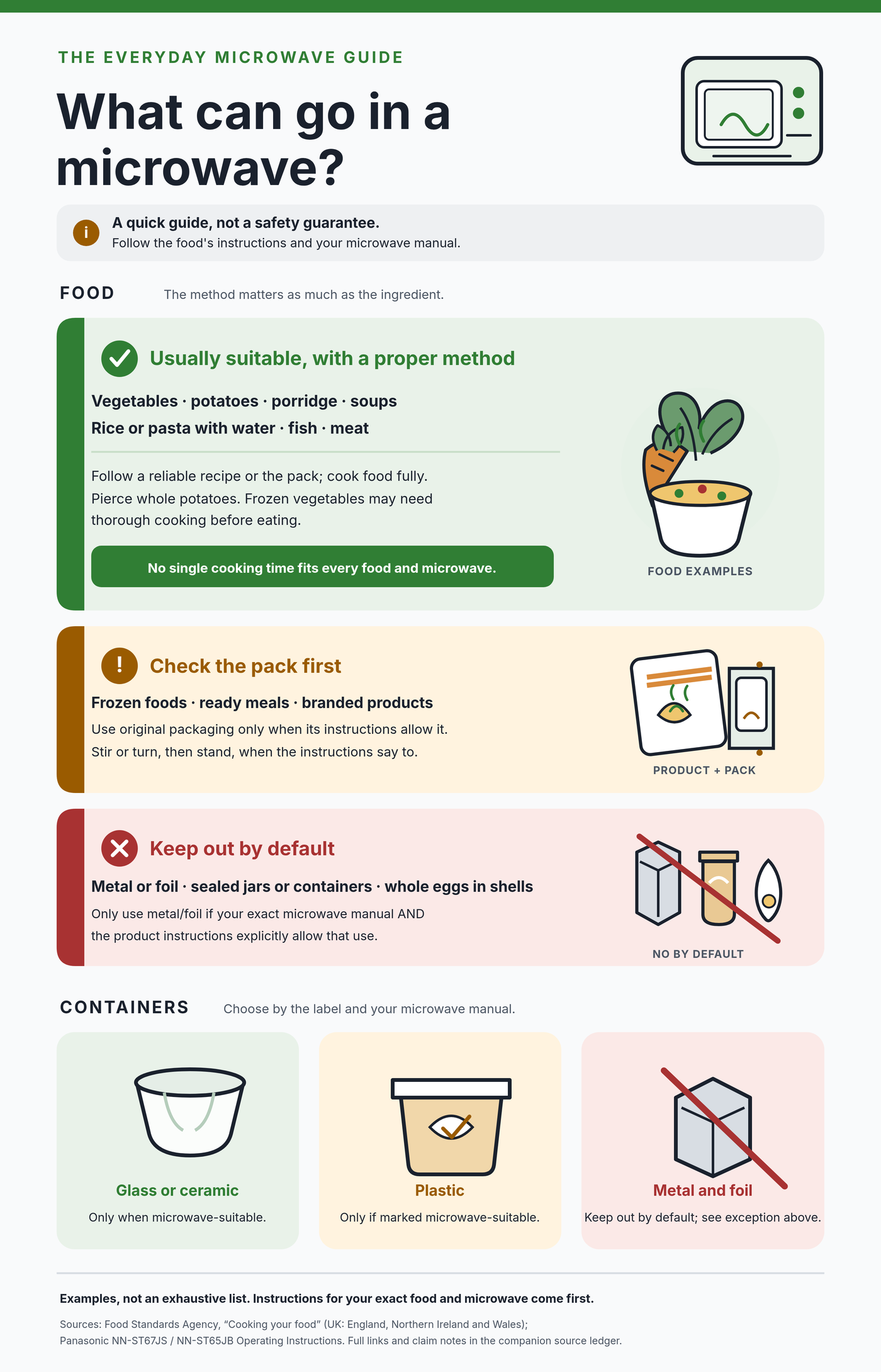
Read the infographic as text
What can go in a microwave? A quick traffic-light guide
A practical starting point, not a complete list or a safety guarantee. Follow the food's recipe or packet and your microwave's manual. Colour is backed up by words and icons.
Usually suitable, with a proper method: Vegetables, potatoes, porridge, soups, rice or pasta with water, fish and meat can be microwave-cooked. Follow a reliable recipe or the pack; cook fully. There is no one cooking time for every microwave or portion. Pierce the skin of whole potatoes before cooking; follow instructions for stirring, turning and standing. Frozen vegetables may need thorough cooking before eating.
Check first: Frozen meals and foods, branded products, and any original packaging. Follow the product instructions and check the container is microwave-suitable. Stir or turn and leave to stand when the instructions say to; microwave heating can be uneven.
Containers: Use glass or ceramic only when microwave-suitable. Use plastic only when it is marked suitable for microwave use.
Keep out by default: Metal and foil, sealed jars or containers, and whole eggs in their shells. Only use a metal/foil product if the manual for your exact microwave and the exact product instructions explicitly say that use is allowed.
These are common examples, not an exhaustive list. When in doubt, use the instructions for the exact food and microwave. Follow the FSA's current cooking guidance.
Follow the method and product instructions, including stirring and standing. Manufacturer guidance: Panasonic microwave manual. Food-safety guidance: FSA cooking advice. Your own appliance manual determines approved accessories.
When there's only one microwave
A dinner with one hot dish and a side that doesn't need heating is easier to organise than several components competing for the turntable. That's why bread is a useful option with the chilli or curry. If both components need heating, use their separate methods rather than putting them together and adding the cooking times.
Stirring and standing matter
Don't skip stirring or standing to hurry dinner along. The FSA explains that microwaved food can be hot at the edges and cold in the centre, so those pauses are part of the method, not spare time at the end. Follow the full cooking instructions and check the food is thoroughly cooked before eating.
If you're saving an extra portion, the FSA's guidance for England, Wales and Northern Ireland is to cool leftovers and put them in the fridge within two hours, then eat them within 48 hours or freeze them. Reheat only once, until steaming hot throughout. Rice has stricter cooling and storage guidance, so don't apply that general leftovers window to a spare rice portion.
Got more ways to cook? Start with what's already in
If you've also got a hob, oven or other cooking equipment, there's more scope to build dinner around the food in your kitchen. PantryAI starts with those ingredients, rather than a recipe that sends you out for another shopping list.
Add food by photo, barcode or by hand, check the recognised ingredients, then search for ideas. Each search returns three AI-generated recipes. Choose Simple or Creative, exclude ingredients you want to save for another meal, and keep recipes you like in your recipe book. Check the staples included in your search too, and switch off anything you don't actually have.
Read the full ingredients and method before you cook, including the equipment needed. Simple isn't a microwave-only setting, so if the microwave is still your only option, stick with methods explicitly written for it rather than assuming an app suggestion will fit.
Start with what's already in
Ready to see what your ingredients could become? Get PantryAI on the App Store for iPhone or Google Play for Android.