
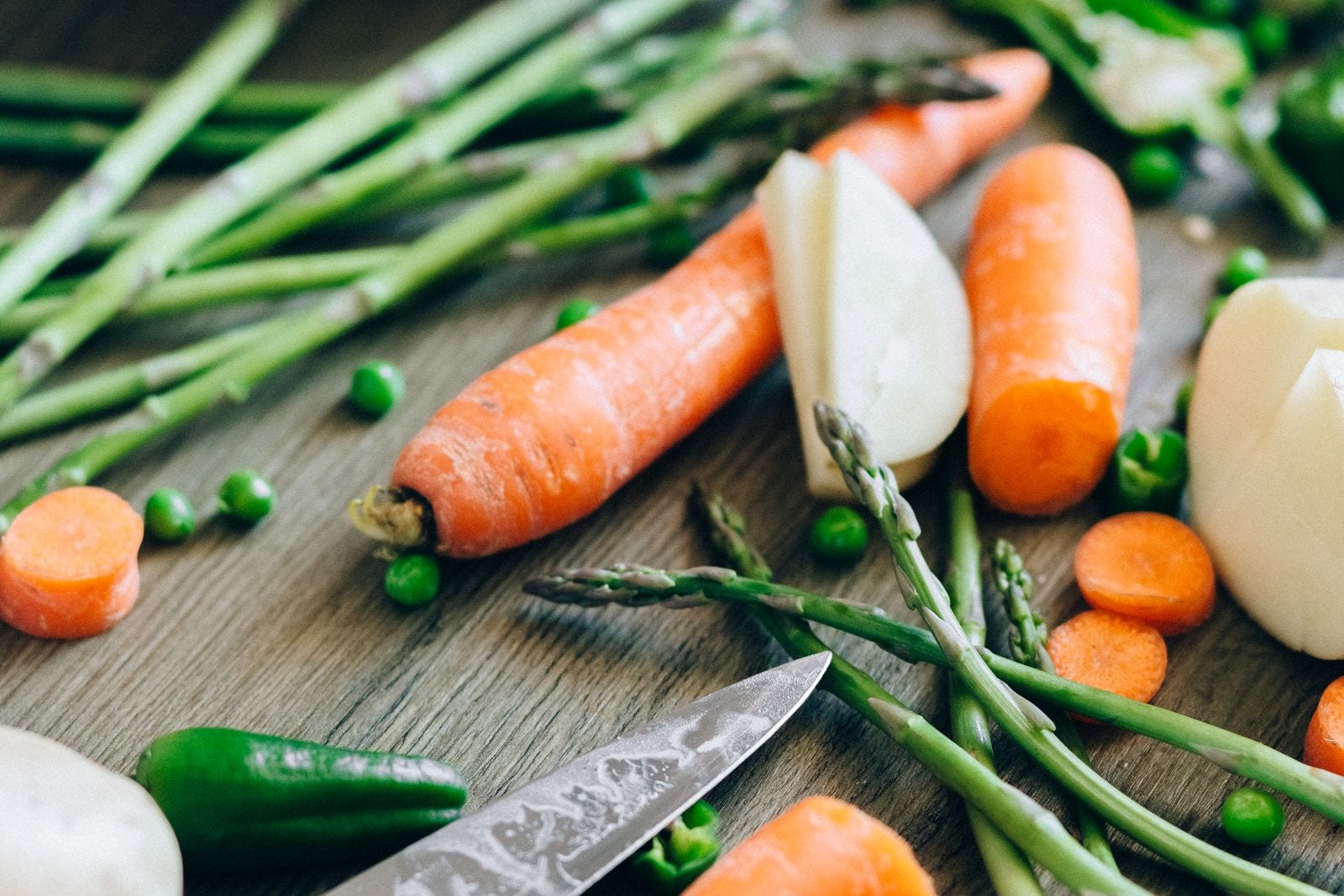
What to cook with the odds and ends in your veg drawer
By PantryAI Team ·
- vegetable odds and ends
- vegetable recipes
- food waste
A few assorted vegetables are enough to start dinner. For two people, put about 400 g of vegetables into a bean and pasta soup, giving carrot and potato a head start before courgette and cabbage. If your drawer is mostly courgette, turn 300 g into six pan-fried fritters instead.
Cook the firm pieces first
Add firm vegetables first and soft ones later. Cut carrot, potato, parsnip or swede into pieces about 1 cm across for soup, and give them a head start before courgette, shredded cabbage or spinach.
Broccoli stalk works too: trim away the tough outside and dice the tender centre. Slice cauliflower stalk thinly and cut florets small. In the soup below, add these firmer pieces with the potato, then test with a knife before adding the pasta. Thick slices or woody stalks need longer than neat small dice.
Make a pan of soup
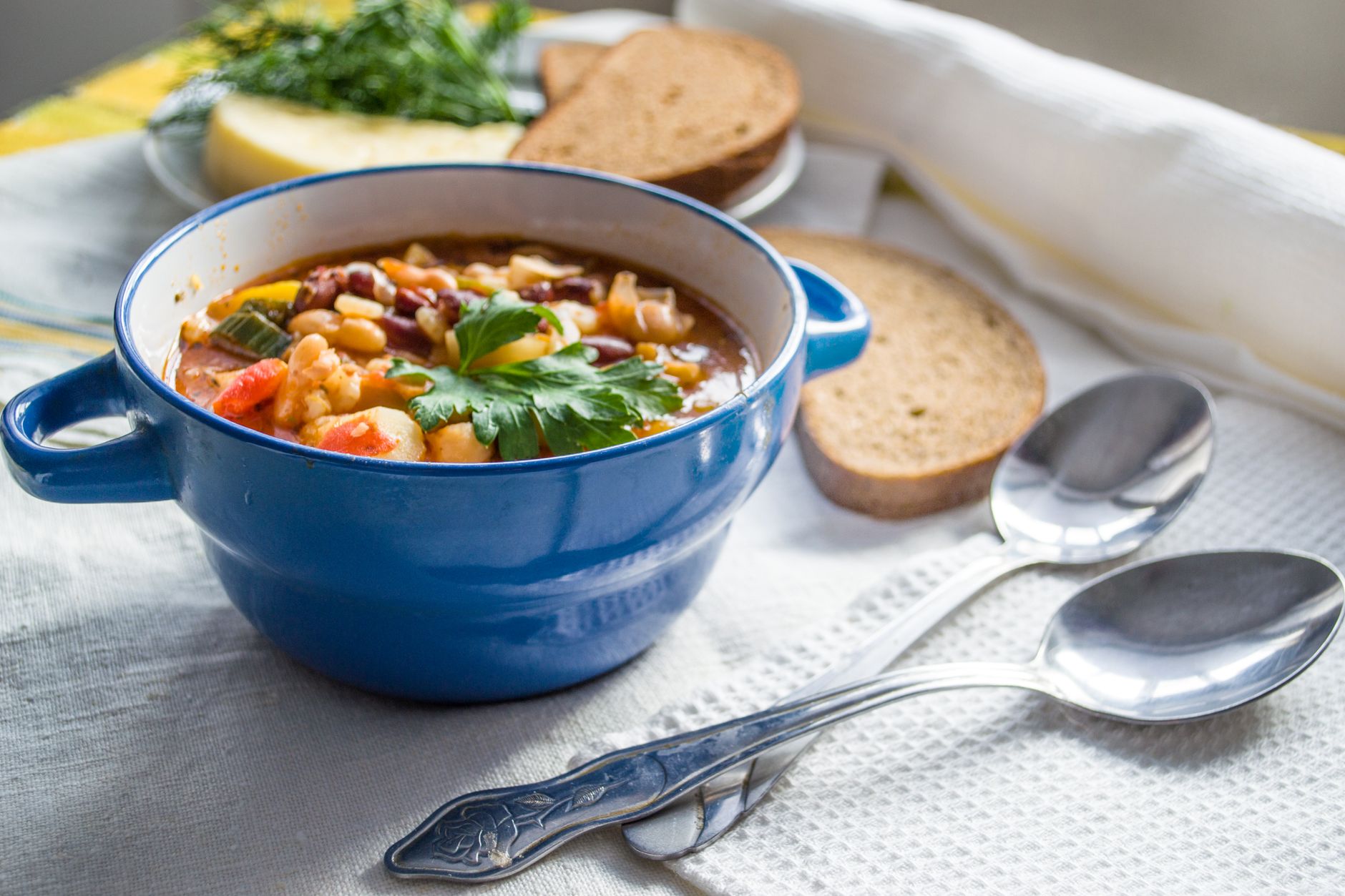
Mixed vegetable, bean and pasta soup
A small carrot, a potato and a piece of courgette become a proper bowl of dinner with beans and a little pasta. Add the softer vegetables later so they keep some shape. Photo by Navada Ra on Pexels.
Ingredients
- 1 tbspolive oil
- 1small onion, finely chopped
- 100 gcarrot, cut into 1 cm dice
- 100 gpotato, peeled and cut into 1 cm dice
- 1garlic clove, finely chopped
- 200 gchopped tomatoes from a tin
- 600 mlvegetable stock, plus extra hot water if needed
- 100 gcourgette, cut into 1 cm dice
- 50 gsmall dried soup pasta with a 10-minute cooking time
- 200 gdrained, ready-to-eat mixed red and white beans from a tin
- 50 gcabbage, finely shredded
- 1 tbspchopped parsley
- to tasteblack pepper
- to tastesalt, only if needed
- 2 slicesbread, to serve
Method
- Heat the oil in a medium saucepan over a medium heat. Add the onion and carrot and cook for 7 minutes, stirring occasionally, until the onion softens. Add the garlic and stir for 1 minute.
- Add the potato, tomatoes and stock. Bring to the boil, then lower the heat and simmer with the lid ajar for 12 minutes. Test a potato cube with a knife; it should be nearly tender before you add the pasta. Give firm pieces another few minutes if needed.
- Stir in the courgette, pasta and drained beans. Simmer for 6 minutes, stirring along the bottom so the pasta doesn't stick. Add the cabbage and cook for 4 minutes more, or until the pasta is tender. You may need a splash more hot water as the pasta swells.
- Taste and season with black pepper and a little salt only if needed, then stir in the parsley. Ladle into warm bowls with a slice of bread each.
Swap the carrot and potato for 200 g of mixed firm vegetables, such as carrot and parsnip. Small broccoli florets can replace the courgette; add them for the last 6–8 minutes. Spinach only needs the last 1–2 minutes.
No cabbage? Use 50 g frozen peas for the last 4 minutes instead. If you've only got 250 g of vegetables, keep the beans and pasta amounts and reduce the stock to 500 ml to start. You can always loosen the soup once you see how much liquid the pasta takes up.
Or make fritters when courgette is the main thing
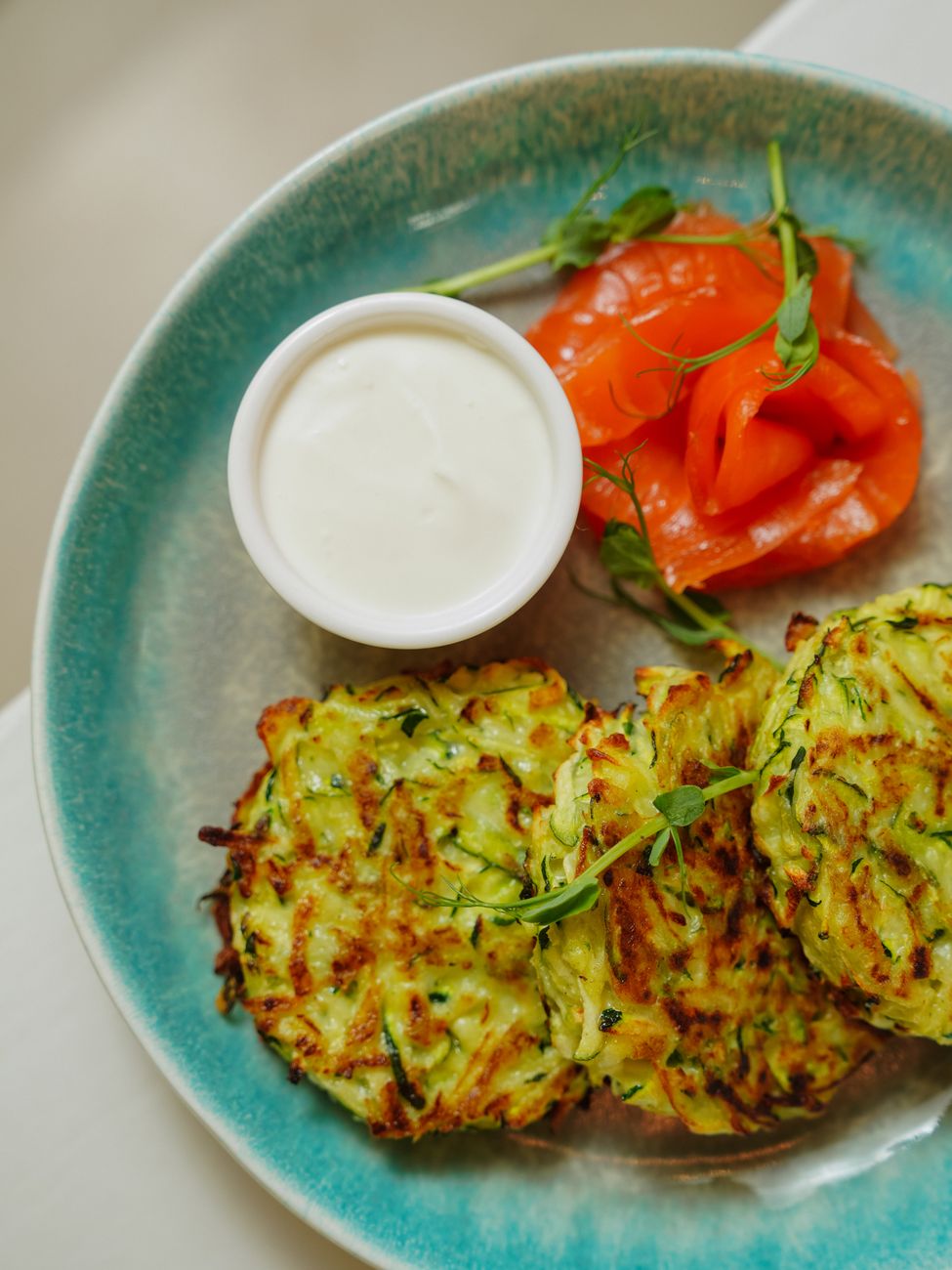
Courgette and spring onion fritters
For a drawer that's mostly courgette, squeezing out the water is worth the extra minute. It lets the batter brown in the pan rather than spread into a wet pancake. Photo by Nadin Sh on Pexels.
Ingredients
- 300 gcourgette, coarsely grated
- 2spring onions, finely sliced
- 1medium egg
- 60 gplain flour
- 1 tbspchopped dill, plus a little to serve
- ¼ tspsalt
- 2 tbspneutral oil, for frying
- 100 gthick plain yoghurt
- 1 tsplemon juice
- 1large tomato, sliced, to serve
Method
- Put the grated courgette in a clean tea towel and squeeze firmly over the sink until it stops dripping freely. Tip the squeezed courgette into a bowl and loosen the shreds with a fork.
- Add the spring onions, egg, flour, dill and salt. Mix until no dry flour remains. The mixture should hold together in a soft mound on a spoon. If liquid collects in the bowl, stir in another tablespoon of flour.
- Heat 1 tablespoon of oil in a wide non-stick frying pan over a medium heat. Spoon in three mounds of batter, using about one-sixth of the mixture for each. Flatten them to roughly 1 cm thick, leaving space between them. Fry for 3 minutes on each side until deeply golden and set through the centre. Turn the heat down if the outsides darken before the middle sets. Transfer to a plate and repeat with the remaining oil and batter to make six fritters.
- Mix the yoghurt and lemon juice. Serve three fritters each with the dip, sliced tomato and a little extra dill.
For a carrot version, replace 100 g of the courgette with 100 g finely grated carrot. Squeeze the courgette first, then add the carrot with the other ingredients. Fine shreds cook through more readily than thick curls, and the fritters will have more bite than the all-courgette version.
A small amount of veg still has a job
If there's not enough for either recipe, use the scraps as part of dinner rather than trying to make them carry it. Thinly slice 80 g of cabbage and soften it in a tablespoon of oil for 5–7 minutes, then toss with cooked noodles and a little soy sauce. Or grate one small carrot into a tomato pasta sauce for its last 10 minutes of simmering; add a splash of water if the sauce gets too thick.
For a wider kitchen clear-out, our guide to reducing food waste helps with the next shop. If you want suggestions that include the rest of the fridge as well as the veg drawer, PantryAI's recipe generator uses the food in your pantry and your selected staples.
Cover photo: Nataliya Vaitkevich on Pexels.